
What Is a Channel Partner? Types, Tiers and How Programmes Work

Most partner programmes look healthy from the inside. Logos on a slide, signed agreements, a portal with training modules nobody has opened. Then a year goes by and indirect revenue is still a rounding error, and the honest explanation never comes up in the review.
It is this: a partner rep has a finite number of customer conversations and several vendors competing for them. They sell whatever makes them money, makes them look good, and does not create work they did not price for. Your programme either wins that comparison or it does not, and signing the agreement was never the decision point.
So before the tiers and the portals, it is worth being precise about what a channel partner actually is, which types behave differently, how margin and tiers really work, and what a partner needs from you before they will put your product in front of a customer they spent years earning.
What Is a Channel Partner?
A channel partner is an organisation that sells, implements or resells your product to customers where it already holds the relationship, in return for margin, services revenue, or both.
The relationship is the asset. A partner has spent years earning the right to recommend things to a customer, and when they recommend you, you inherit some of that trust. That is the entire value of the model, and it explains why indirect revenue takes longer to start and lasts longer once it does.
It is also why channel programmes fail quietly rather than loudly. A partner who is not selling does not complain. They simply sell something else.
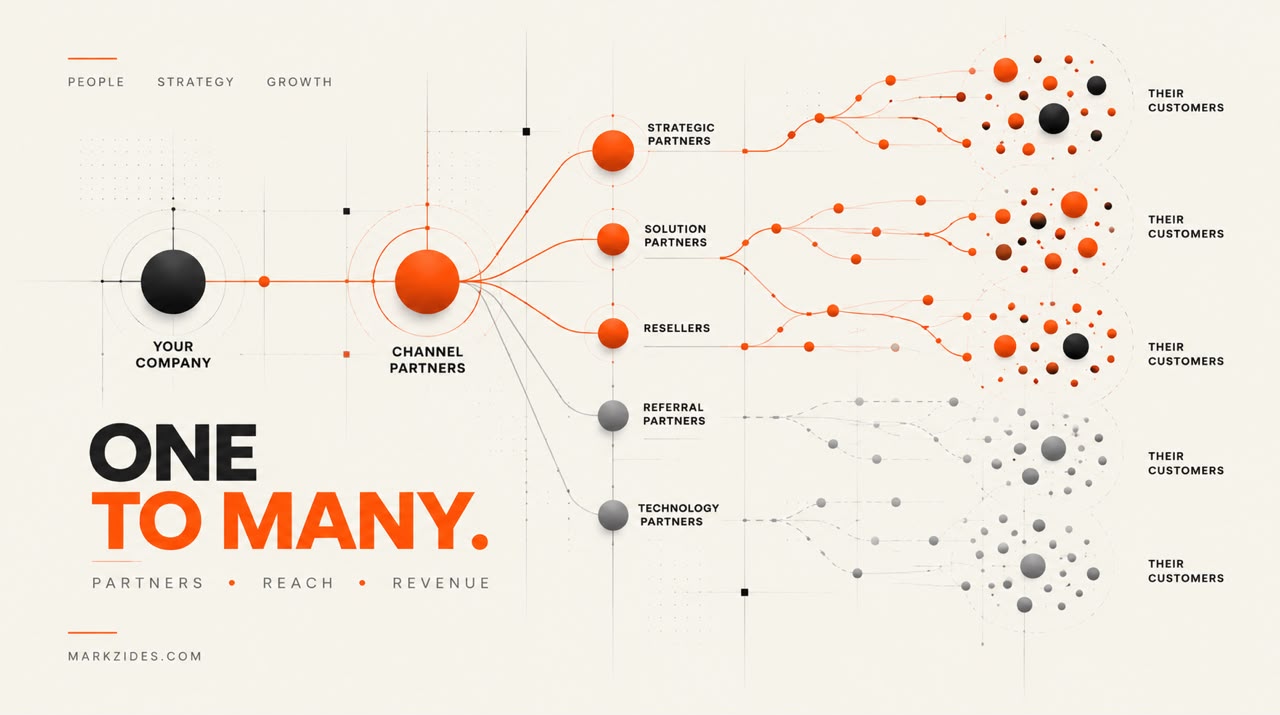
The Four Types of Channel Partner
The label matters less than what the partner does with the product and who holds the customer relationship afterwards.
Resellers and value-added resellers
They buy at a discount and sell on, often bundling their own configuration, training or support. A VAR adds something material; a pure reseller adds reach.
They own the customer relationship and usually the invoice, which is the trade you are making.
Systems integrators
They design and build the wider system your product sits inside. Their revenue is services rather than licence, so they favour products that create implementation work rather than remove it.
Powerful in enterprise deals, and slow to onboard, because their consultants have to be trained before they will recommend anything.
Managed service providers
They run something on the customer’s behalf and bill monthly. They care about operational cost and support burden far more than about features, because your product either reduces their labour or adds to it.
Referral and technology partners
Referral partners pass an introduction for a fee and never touch the sale. Technology partners integrate, and go to market together because the combination is worth more than either half.
Both are cheap to start and easy to neglect, which is why most co-sell motions produce a press release and little else.
How Tiers and Margins Work
Almost every programme uses tiers, usually three, and the purpose is concentration rather than status.
A small number of partners will produce most of the indirect revenue. Tiers exist so investment, margin and attention flow to those partners instead of being spread evenly across a list of signatures.
- Entry tier. Anyone qualified can join. Access to materials and a standard discount. Low cost to you, low commitment from them.
- Middle tier. Earned with certifications and a revenue threshold. Better margin, deal registration, some marketing support.
- Top tier. A small group. Best margin, joint business planning, named support, and access to your roadmap.
Margin is the headline but rarely the deciding factor on its own. Partners weigh three things: how much they make, how hard it is to sell, and how confident they are that you will not embarrass them in front of their customer.
What a Partner Programme Has To Give a Partner
Most programmes are designed around what the vendor wants. The ones that work are designed around what the partner needs in order to choose your product over the alternative sitting next to it.
- Margin worth the effort. Compared honestly against what else they could sell that hour.
- Deal registration that is honoured. The single fastest way to lose a channel is to take a registered deal direct.
- Enablement their people will finish. Short, role-specific, and aimed at the person in front of the customer rather than at the partner’s executive.
- Pre-sales support. Someone they can call when the customer asks a question they cannot answer.
- Demand, not just permission. Leads passed to partners, or joint marketing funded, so the relationship starts with revenue rather than paperwork.
Channel Conflict, and How To Settle It
Channel conflict is what happens when your direct team and your partner both believe they own the same customer. It is a design problem, and it is solved before the first deal rather than argued afterwards.
- Write rules of engagement that name which accounts, segments or geographies are partner-led.
- Register deals, timestamp them, and honour the registration even when it costs you margin.
- Compensate your direct team neutrally, so a rep does not lose money when a partner wins.
- Publish the rules to partners. Unwritten rules are read as favouritism, and one visible breach ends the trust.
When a Channel Model Is the Wrong Answer
Partners are not a shortcut for a product that does not sell. If your direct team cannot articulate the value proposition and close deals with it, a partner with divided attention certainly will not.
- You have not yet sold it repeatably yourself, so there is no motion to teach.
- The product needs heavy customisation that only your team can do.
- Margins are too thin to leave a partner enough to care about.
- Nobody internally owns partners, so recruitment happens and enablement does not.
The honest sequence is direct first, then channel. A motion that works is the thing you are actually asking a partner to adopt.
Channel Partner Checklist
- The partner types you want are named, and you know what each one earns from you.
- Tiers concentrate margin and support on producers rather than on signatures.
- Deal registration exists, is timestamped, and has been honoured at cost at least once.
- Enablement is role-specific and short enough to be finished.
- Rules of engagement are written and shared with partners, not just internally.
- One person owns partner revenue and is measured on it.
How Partners Decide What To Sell
A partner rep has a finite number of customer conversations and several vendors competing for them. Understanding how that choice is made is most of channel strategy.
Money, per hour of effort
Not headline margin. Margin divided by the work required to earn it, including pre-sales, implementation risk and the support calls that arrive afterwards.
Confidence in front of the customer
A partner is lending you their reputation. If your product has failed once in front of their client, no discount recovers that. This is why responsiveness during a partner’s deal matters more than the programme brochure.
Ease of the first sale
Whether their rep can explain it in a sentence and get a meeting. Products that need three conversations to explain lose to products that need one, even at lower margin.
Whether the vendor competes with them
If your direct team has ever taken a deal a partner sourced, the whole partner organisation knows within a month, and the programme is finished whatever the rules say.
What Good Partner Enablement Looks Like
Enablement is where most programmes quietly fail. Vendors build training for the partner’s executive; deals are won or lost by the person in front of the customer.
- Role-specific and short. A different asset for the partner’s sales rep, their pre-sales engineer, and their delivery team. None of them longer than an hour.
- One page they can send. Partners rarely resell your brochure. They forward one page, so make it a good one.
- A live person on call. Named pre-sales support during a partner deal is worth more than the entire portal.
- Objection handling from real deals. Not features. The four questions their customer will actually ask, with answers that survived contact.
- A first deal worked together. Nothing teaches a partner how to sell your product like closing one alongside you.
The test of enablement is not completion rates. It is whether a partner rep, with no preparation, can explain what you do and why it matters to the customer sitting in front of them.
Frequently Asked Questions
What is the difference between a channel partner and a reseller?
A reseller is one type of channel partner. The wider term also covers systems integrators, managed service providers, referral partners and technology alliances, which have different economics and sell in different ways.
What margin do channel partners expect?
It varies by model and by how much work the partner does. What matters more is whether the margin is worth their time against the alternatives they could sell in the same hour, and whether it rises with tier.
How long does a channel programme take to produce revenue?
Longer than most plans assume, because partners have to be recruited, trained and then given a reason to prioritise you. Programmes that expect revenue in the first quarter usually get press releases instead.
What is deal registration?
A process where a partner registers an opportunity they sourced and receives protection and better margin on it. It is the mechanism that makes a partner willing to invest in finding deals.
Can a small company run a channel programme?
Yes, with fewer partners. A small vendor with five committed partners will out-earn one with fifty who signed and never sold. The limiting factor is enablement capacity, not partner count.
Who should own partners internally?
One person, measured on indirect revenue rather than on partners recruited. Where that role does not exist yet, it is often held on a fractional basis first.
Final Thought
A channel partner will sell your product when it makes them money, makes them look good, and does not create work they did not price for. Everything else in a partner programme is administration.
The vendors who do well in the channel treat partners as a customer segment with their own needs and their own buying decision, rather than as a distribution list that has already agreed.
Ready to build a revenue engine that runs without you?
Mark works alongside founders as a player-coach — not a slide deck.
Book a 30-minute call