
How to Build a High-Performing Team: What Sets One Apart and What the Leader Does

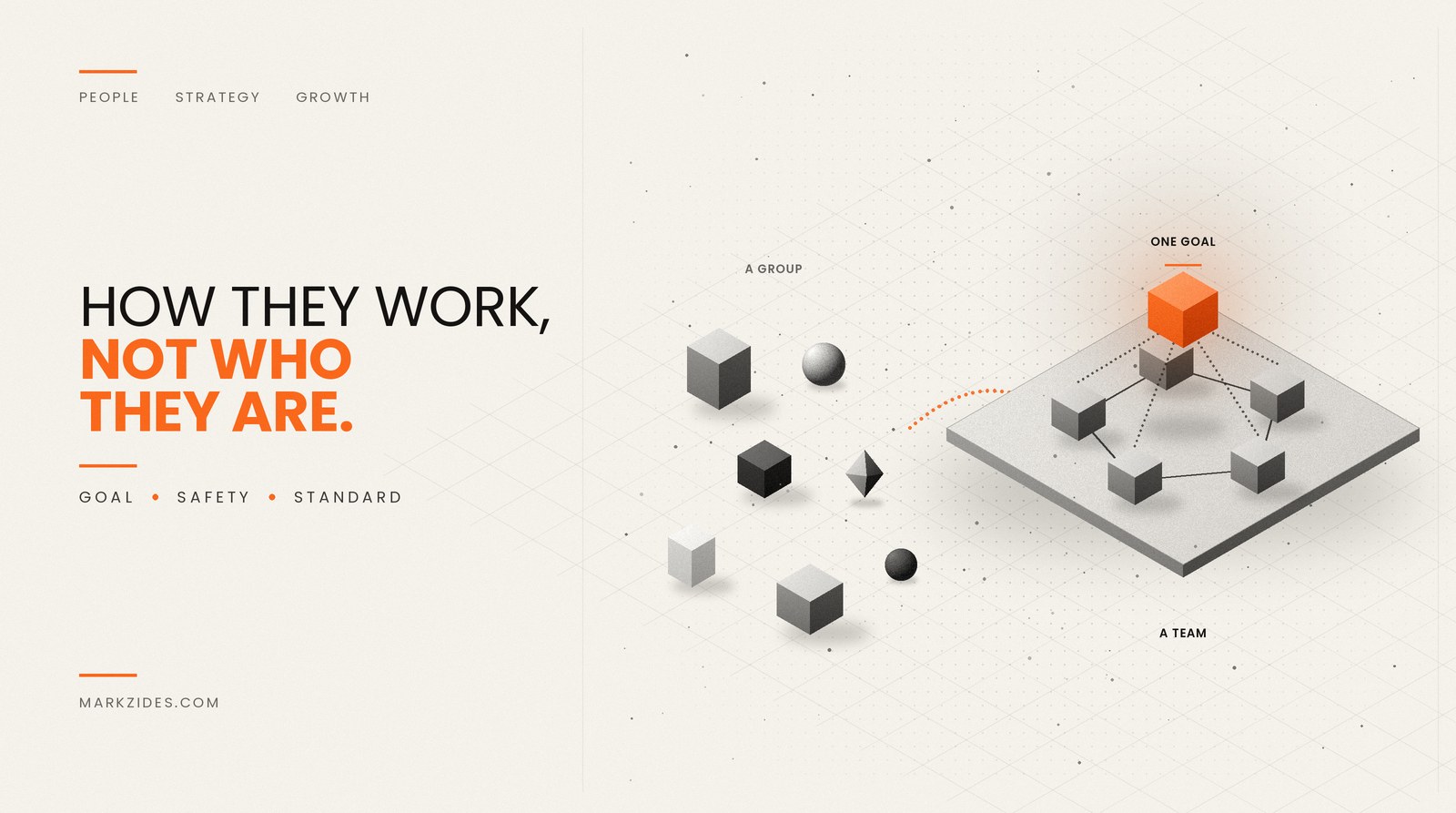
You have hired well. Every person on the team is capable, and several are better at their jobs than you would be. Yet the team adds up to less than its parts. Meetings are polite and short on argument. One or two people carry most of the load, and quietly resent it. Problems surface late, usually after a customer has noticed them. Nobody is failing, exactly, and nobody would call the team great either. The distance between a group of good people and a high-performing team is real, and it rarely closes on its own.
How to Build a High-Performing Team in 7 Steps
Each step is something the team's leader does, whether that is the founder, a department head or a team lead. None of them needs a budget.
1. Give the Team One Goal With a Number
A team needs a goal it can only reach together, with a number and a date: renew a set share of contracts by year end, or launch the new service line by June. Individual targets still matter, but a team with only individual targets is a group of people who happen to share a manager. Keep it to one goal, two at most. A list of eight priorities is no priority at all.
Do this: Write the team goal on one line and put it at the top of every team meeting.
2. Make Every Role Clear
Each person should be able to say what they own, what they are measured on, and where their job ends and a colleague's begins. Overlaps cause friction. Gaps cause dropped work that everyone assumed someone else had.
Do this: Ask each person to write their role in three lines, then compare the answers side by side. The gaps and overlaps show up at once.
3. Make It Safe to Speak Up
This is the step that matters most, and the one leaders most often get wrong without noticing. People speak up when the leader rewards it: thanks the person who brings bad news, asks for the opposite view, admits their own mistakes first, and never punishes an honest question. Speak last in discussions, so your view does not end the conversation before it starts.
Do this: In your next three meetings, ask "What are we missing?" before any decision, and thank whoever answers.
4. Set a Working Rhythm
Give the team fixed meetings with fixed purposes: a short weekly meeting on priorities and blockers, a monthly look at results against the goal, and a quarterly review of how the team is working. Rhythm makes commitments visible, which is what makes them stick. It is the same logic as a company's operating rhythm, applied to one team.
Do this: Put the weekly, monthly and quarterly meetings in the calendar for the next six months.
5. Hold the Standard
Dependable teams do what they said they would, to the quality expected, on time. That only holds if the leader holds it: notice when work slips, say so early and in private, and treat a missed commitment as information rather than a disaster. A standard that is not enforced for one person is not a standard for anyone.
Do this: Write down the three or four things that define good work on this team, and check against them in every one-to-one.
6. Settle How Decisions Are Made
For each kind of decision, agree who decides, who must be consulted and who is simply told. Decisions do not need consensus. In Google's study, consensus decision-making was not linked to team effectiveness. What matters is that people know how a decision will be made, have their say, and commit once it is made. Pushing decisions to the people closest to the work is also how an owner delegates without losing control.
Do this: List the five decisions the team makes most often, and write down who makes each one.
7. Check the Team's Health Each Quarter
Results tell you how the team did. They do not tell you why, or what is about to go wrong. A short, honest check on how the team is working does both. The check further down takes 15 minutes.
Do this: Book the first check now, for the last week of this quarter.
What Is a High-Performing Team?
A high-performing team is a group that keeps reaching goals none of its members could reach alone, and keeps doing it as the work and the people change. Two parts of that matter. The results are shared, and they last. A team that hits one big deadline through heroics, then loses two people to exhaustion, is not high-performing. A team that hits its numbers quarter after quarter, raises problems early and absorbs a new member without losing pace is.
It is also different from a group of strong individuals. Each person in a group can be excellent at their own job while the work between them falls apart. The same is true at the top of a company, where the leadership team has to act as one team rather than a set of department heads.
What Sets a High-Performing Team Apart
Google set out to learn why some of its teams did better than others. In its study of team effectiveness, it looked at 180 teams, 115 project teams in engineering and 65 pods in sales, a mix of high and low performers. Its conclusion: "what really mattered was less about who is on the team, and more about how the team worked together."
It found five conditions, in order of importance:
- Psychological safety: people feel safe to take a risk, ask a question or admit a mistake in front of each other. Google called it "by far the most important" of the five.
- Dependability: people get their work done on time and to a high standard.
- Structure and clarity: roles, plans and goals are clear.
- Meaning: the work matters to each person personally.
- Impact: people believe their work makes a difference.
The payoff from the first condition was large. People on teams with higher psychological safety were less likely to leave, brought in more revenue, and were "rated as effective twice as often by executives."
Just as telling is what did not matter at Google: sitting together, deciding by consensus, how extroverted people were, individual performance, workload, seniority, team size and tenure. Google notes that some of these may still matter in other companies. The lesson stands anyway. You cannot hire your way to a high-performing team. You have to build how it works.
What It Looks Like in a Normal Week
The five conditions are hard to see directly. Their effects are easy to see:
- Bad news arrives early. Someone says "this will be late" on Monday, not on Friday.
- Disagreement happens in the room. People argue about the work, then commit. Nobody reopens the decision in the corridor afterwards.
- Commitments are kept, and when one cannot be, people say so before the deadline, not after.
- Help is asked for and offered without anyone keeping score.
- The goal comes up more than blame. When something goes wrong, the question is what to change, not whose fault it was.
- New people get up to speed quickly, because the way the team works is visible rather than kept in a few heads.
When you see the opposite, such as surprises at month end, silence in meetings or a few people doing all the heavy lifting, one of the five conditions is missing. A team where one or two people carry the load is fragile, and when one of them is the founder, it is a short road to founder burnout.
The 15-Minute Team Health Check
Once a quarter, ask every member to score ten statements from 1 (strongly disagree) to 5 (strongly agree), anonymously. Share the average and the spread for each statement. Spend ten minutes on the lowest-scoring one, and agree one change before you leave the room.
| Statement | A low score points to |
|---|---|
| I can raise a problem or admit a mistake without it being held against me. | Safety (step 3) |
| When someone disagrees with the leader, it is welcomed. | Safety (step 3) |
| People on this team do what they say they will do. | Dependability (step 5) |
| Work here meets the standard we have agreed. | Dependability (step 5) |
| I know exactly what I own and what I am measured on. | Roles (step 2) |
| I know the team's goal for this quarter and how we are doing against it. | Goal (step 1) |
| I know how decisions on this team are made. | Decisions (step 6) |
| The work I do here matters to me. | Meaning |
| I can see how our work changes results for the company or its customers. | Impact |
| When someone is not meeting the standard, it gets dealt with. | Holding the standard (step 5) |
A wide spread on a statement matters as much as a low average. It means people on the same team are having very different experiences of it, which is usually worth a private conversation or two before the next check.
The Person Who Is Not Meeting the Standard
Every team has had one. Google found that individual performance was not what separated effective teams from the rest, but one person who keeps missing the standard can still drag down dependability for everyone. The others pick up the extra work, and they watch what the leader does about it.
- Name it early and in private, with specifics: what was expected, what happened, and the effect on the team.
- Find the cause: skill, effort, clarity or circumstances. Unclear roles cause many apparent performance problems, so check that first.
- Agree a plan with a date: what good looks like in the next 30 to 60 days, and what support they will get.
- Act on the date. If the work has improved, say so clearly. If it has not, move the person to a role that fits or let them go, fairly and with dignity.
Tolerating poor work for months tells your best people that the standard is optional. They are usually the first to leave.
When a Good Team Slips
High-performing teams do not stay that way on their own. The common causes:
- Growth. New members soon outnumber the people who know how things work. In sales, this is why scaling a sales team goes wrong so often: new sellers arrive faster than the habits that made the first ones good can be passed on.
- A new leader. The unwritten rules change, often without anyone saying so.
- A lost member. Someone who held things together informally leaves, and nobody notices what they did until it stops.
- A goal that stopped meaning anything, because it is hit too easily or is plainly out of reach.
- A problem left alone, usually one person's behavior or performance.
The fix starts the same way each time. Run the health check, find the condition that dropped, and go back to the step that builds it.
Five Mistakes Leaders Make
- Hiring stars and expecting a team. Talent sets the ceiling; how the team works decides how close it gets.
- Team-building events instead of changed habits. An away day cannot fix a meeting where nobody says what they think.
- An open door that punishes. Saying "bring me problems" and then reacting badly to the first one teaches silence.
- Individual targets only. Without a shared goal, people optimize their own number at the team's expense.
- Waiting too long on the person who is not meeting the standard.
Frequently Asked Questions
What are the characteristics of a high-performing team?
Google's study of 180 teams found five conditions, in order: psychological safety, dependability, structure and clarity, meaning, and impact. In practice that looks like bad news raised early, open disagreement before decisions, commitments kept, clear roles and a shared goal that everyone can name.
What is the leader's role in a high-performing team?
The leader sets the goal, makes roles clear, makes it safe to speak up, holds the standard and settles how decisions are made. Above all, how the leader reacts to bad news and disagreement decides whether people keep bringing them.
How long does it take to build a high-performing team?
Most teams show a change within one or two quarters once the goal, roles and rhythm are clear. Trust and safety take longer, often several quarters, because people believe what a leader does repeatedly, not what the leader says once.
How do you measure team performance?
Measure results against the team's goal, and measure how the team works with a short quarterly health check scored by every member. Track both over time. Results lag, and the health check often shows a problem a quarter before the numbers do.
What is the difference between a team and a high-performing team?
A team shares a goal. A high-performing team reaches it again and again, beyond what its members could do alone, and keeps doing so as people and work change, because how it works together is deliberate rather than left to chance.
Final Thought
A high-performing team is not a lucky mix of people. It is built, by a leader who gives it one goal, clear roles, a rhythm, a standard and the safety to say what is going wrong. Start with the step your team scores lowest on, and check again next quarter. That is the O in Mark's UNLOCK Method: organize for growth, so results stop depending on a few people carrying the load. Mark founded CoreAxis Consulting, an award-winning eight-figure learning, leadership-development and talent-management company, and building teams that perform without the founder in every room is part of the work of a growth advisor.
Ready to build a revenue engine that runs without you?
Mark works alongside founders as a player-coach — not a slide deck.
Book a 30-minute call